Quick summary
Paper GSM affects how a printed piece feels, folds, handles ink, and performs in real use. Learn how to choose a suitable paper weight for flyers, brochures, cards, stationery, packaging inserts, and other print jobs.
Paper choice can change the way a print job looks, feels, folds, and performs. One of the most common specifications used to compare paper is GSM, short for grams per square metre. It tells you the weight of one square metre of a particular paper, which makes it a useful reference when comparing different stocks.
GSM is often described as paper thickness, but that is only partly correct. A higher GSM usually feels heavier and often thicker, yet two papers with the same GSM can still differ in actual thickness because of coating, fibre structure, compression, texture, and manufacturing method. For practical print buying, GSM is best treated as a reliable guide to paper weight and general feel rather than an exact measurement of thickness.
Choosing the right GSM depends on what you are printing, how the piece will be handled, whether it needs to fold, how premium it should feel, and what printing or finishing process will be used. Understanding these factors helps avoid both under-specifying and over-specifying paper.
What Does GSM Mean in Printing?
GSM means grams per square metre. If a paper is rated at 100 GSM, one square metre of that paper weighs approximately 100 grams. A 300 GSM sheet is therefore much heavier per square metre than a 100 GSM sheet.
This system makes paper easier to compare because it is based on area rather than sheet size. An A4 sheet and an A3 sheet made from the same paper stock have different individual weights, but the GSM rating remains the same.
In everyday printing, lower GSM papers are generally lighter and more flexible, while higher GSM stocks feel sturdier and more substantial. However, GSM alone does not tell you everything. Surface coating, texture, stiffness, opacity, and finish can influence the final result just as much as weight.
GSM Is Not Exactly the Same as Thickness
Many people use GSM and thickness interchangeably, but they measure different properties. GSM measures weight per area. Thickness is measured as the physical depth of the sheet, often in microns or millimetres.
A dense coated paper can have the same GSM as a bulkier uncoated paper while feeling thinner. Likewise, a textured or high-bulk paper may feel thicker than a smooth stock with an identical GSM rating.
This matters when your job has strict folding, binding, mailing, packaging, or machine-feeding requirements. If exact thickness is important, ask for the paper's caliper or a physical sample instead of relying only on GSM.
Typical GSM Ranges and Where They Are Used
There is no single GSM that is best for every job. The following ranges are useful as general orientation, but the ideal choice still depends on the specific stock, print method, and intended use.
60–90 GSM: Lightweight Everyday Paper
This range is commonly associated with lightweight writing and office papers. It is flexible, easy to handle, and suitable where the main requirement is information rather than premium presentation.
It may be appropriate for internal documents, basic forms, instruction sheets, multi-page text-heavy material, and other applications where keeping bulk low is useful. Very light stocks can show more print through from the reverse side, especially with dark or heavy ink coverage.
90–130 GSM: Flyers, Inserts, and General Promotional Prints
This range gives a little more body while remaining easy to fold and distribute. It can work well for leaflets, promotional inserts, notices, handouts, simple menus, and economical marketing pieces.
Around this range, paper begins to feel more deliberate than ordinary office paper without becoming card-like. It is useful for campaigns where a large quantity needs to remain practical to handle.
130–170 GSM: Brochures, Posters, and Premium Flyers
Stocks in this range feel noticeably more substantial. They are often suitable for brochures, product sheets, event flyers, small posters, promotional leaflets, and other pieces where presentation matters.
They generally hold colour well and create a more polished feel than lighter papers. When folding is required, grain direction and finishing method become more important, especially with coated stocks and heavy ink coverage.
170–250 GSM: Covers, Menus, Invitations, and Sturdy Inserts
This range moves toward light card. It is useful when the printed piece needs extra stiffness or should feel more durable in the hand.
Possible applications include booklet covers, certificates, menu cards, premium invitations, presentation inserts, tags, and promotional cards. Depending on the exact GSM and paper construction, scoring before folding may be advisable to reduce cracking along fold lines.
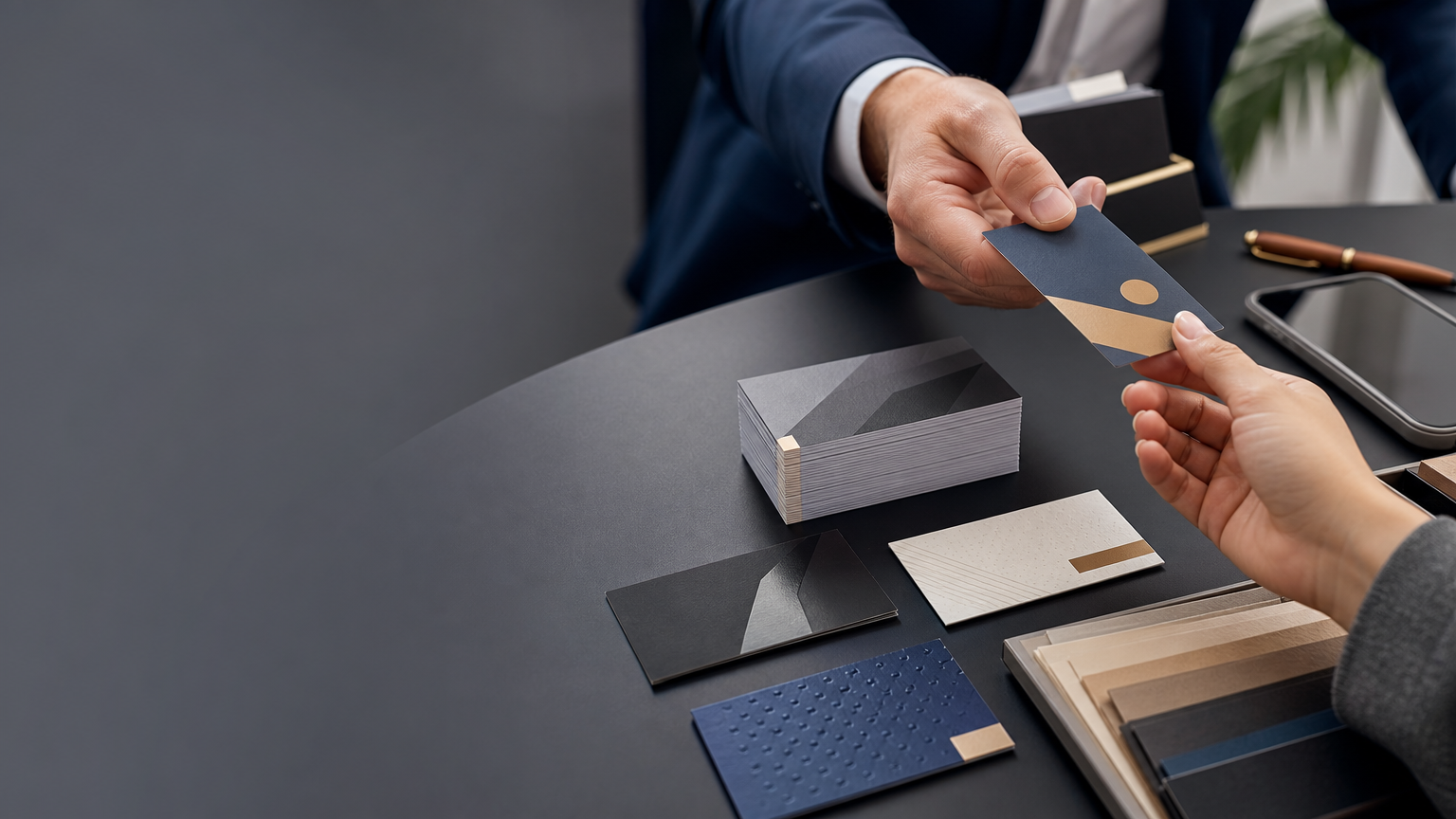
250–350 GSM: Business Cards, Postcards, and Premium Cards
Higher GSM stocks are commonly selected for items that should feel firm and substantial. Business cards, postcards, invitation cards, product tags, premium covers, and presentation cards often fall into this category.
The right choice depends on the desired stiffness, printing method, finishing, and whether the piece needs to pass through specific equipment. A very heavy stock may feel premium, but it is not automatically better for every design or process.
350 GSM and Above: Heavy Card and Specialty Applications
Very heavy stocks can be useful for luxury cards, rigid presentation pieces, premium tags, certain packaging components, and specialty print applications. At this level, production method becomes especially important because not every printing, cutting, folding, or finishing process handles very thick material in the same way.
How to Choose the Right GSM for Your Print Job
1. Start with the Purpose of the Printed Piece
Ask how the customer will use the item. A flyer that is handed out quickly has different requirements from a business card that stays in a wallet or a menu that may be handled repeatedly.
If the piece is temporary and information-led, a lighter stock may be appropriate. If it is meant to create a premium impression or survive repeated handling, a heavier paper may make more sense.
2. Consider Folding Requirements
Heavier papers can fold well, but they often need more preparation. Scoring creates a controlled fold line and can help reduce surface cracking, especially on coated or digitally printed sheets with heavy toner or ink coverage.
If your design includes multiple folds, very heavy stock may make the finished piece bulky or difficult to close neatly. In such cases, a slightly lighter GSM can produce a cleaner result.
3. Think About Opacity
Opacity refers to how much printing from the reverse side shows through the sheet. Lightweight paper can allow more show-through, particularly with dark images or strong colour coverage.
For double-sided brochures, menus, certificates, or other presentation pieces, a more opaque paper may improve readability and visual quality. Opacity is influenced by paper construction as well as GSM, so samples are useful when this is important.
4. Match the Paper to the Printing Process
Different printing processes have their own paper compatibility requirements. Some stocks are designed for offset printing, some perform well in digital production, and certain textured or specialty papers may need specific handling.
Before finalizing a paper, confirm that the selected stock works with the production method and the required sheet size. This is particularly important for very light, very heavy, coated, textured, or specialty materials.
5. Consider the Finish
Lamination, foil effects, embossing, spot finishes, cutting, creasing, and other finishing processes can influence the best paper choice. A heavier GSM often provides more support for certain premium finishes, but stock surface and construction are equally important.
The paper should be selected as part of the complete production plan rather than as an isolated decision.
6. Balance Feel with Practicality
It is easy to assume that heavier paper always feels more premium. In reality, premium presentation comes from the combination of material, design, colour, print quality, finish, and suitability for purpose.
A very thick flyer may be unnecessary and expensive to distribute. A very light invitation may feel less substantial than intended. The best GSM is the one that supports the job without creating avoidable bulk or production issues.
Coated vs Uncoated Paper at the Same GSM
Two papers with the same GSM can look and feel very different depending on their surface.
Coated paper has a smoother surface and is often selected when sharp images, bright colours, and a polished appearance are important. Gloss, silk, satin, and matte coated finishes each create a different visual effect.
Uncoated paper has a more natural surface and is often easier to write on. It can suit stationery, letterheads, certificates, invitations, premium editorial pieces, and designs where a tactile paper feel is part of the presentation.
When comparing GSM, always compare the actual stock type as well. A 170 GSM coated sheet and a 170 GSM uncoated sheet may not feel equally thick or stiff.
Common Mistakes When Choosing Paper GSM
One common mistake is selecting paper only by GSM without considering finish or paper type. Another is choosing the heaviest available stock simply because it sounds more premium. Excessive weight can create problems with folding, binding, mailing, or equipment compatibility.
Another mistake is approving a job based only on a screen mockup. A digital preview cannot show how heavy, stiff, smooth, textured, glossy, or absorbent the paper will feel. Where the paper choice is important to the customer experience, reviewing a physical sample is much more reliable.
It is also important to consider the complete job. A brochure may need enough body for good presentation but still need to fold cleanly. A card may need stiffness but also need to accept a particular finish. The right decision comes from balancing all of these requirements.
Quick Practical Guide
- Light documents and forms: generally lower GSM for flexibility and low bulk.
- Flyers and inserts: light to medium GSM depending on budget and presentation.
- Brochures and premium leaflets: medium GSM for better body and colour presentation.
- Covers, menus, and invitations: medium-heavy stock for added stiffness.
- Business cards and postcards: heavier card stock for durability and a substantial feel.
- Specialty premium pieces: heavy card where production and finishing methods support it.
Final Thoughts
Paper GSM is a useful starting point for choosing print material, but it should not be the only factor. The best paper weight depends on the purpose of the piece, how it will be handled, whether it needs to fold, the required print quality, the surface finish, and the production method.
Instead of asking only, “Which GSM is best?”, ask, “Which paper will perform best for this specific print job?” That broader question leads to better decisions. Compare GSM, paper type, coating, stiffness, opacity, and finish together, and use a physical sample when the feel of the final product matters. A well-matched paper choice helps the design look right, function properly, and create the intended impression.