Quick summary
Explore practical printed marketing materials for small businesses, from visiting cards and flyers to brochures, banners and labels, with tips on choosing, designing and measuring each one.
Digital marketing can help people discover a small business, but printed materials still have an important job: turning an introduction into something tangible. A well-designed visiting card can make a conversation easier to remember. A clear flyer can put an offer in front of nearby customers. A sign or banner can help people notice a shop they pass every day. The right mix depends on who you want to reach, what action you want them to take, and where the material will be used.
There is no need to print every format at once. Small businesses usually get more value from a focused set of materials that work together than from a large collection with inconsistent messages. This guide explains the most useful options, when each one makes sense, and how to plan printing with purpose.
Start with the goal, not the product
Before choosing paper, size or finish, decide what the campaign needs to achieve. Are you trying to bring people into a new store, introduce a service, support a sales meeting, encourage repeat orders or make packaging more memorable? Each goal points toward a different format.
Think about the moment a customer will see the material. Someone walking past a storefront has only seconds to notice a message. Someone comparing suppliers may want detailed specifications. Someone receiving a parcel may appreciate a small thank-you insert with clear contact information. Match the amount of information to the attention available.
1. Visiting cards for personal connections
Visiting cards are particularly useful for owners, sales representatives, consultants and service providers who meet customers face to face. They make it easy to share a name, role, phone number and business identity without asking the other person to type details immediately.
Keep the front uncluttered and use a readable type size. Include only contact channels that are actively monitored. If you add a QR code, test it on multiple phones and make sure it leads to a useful page. Paper stock and finishes can influence the feel of the card, but clarity matters more than decorative effects.
Best use
Carry cards to client visits, networking events, trade meetings and local business introductions. Treat the card as a reminder of a genuine conversation, not a substitute for one.
2. Flyers and leaflets for local awareness
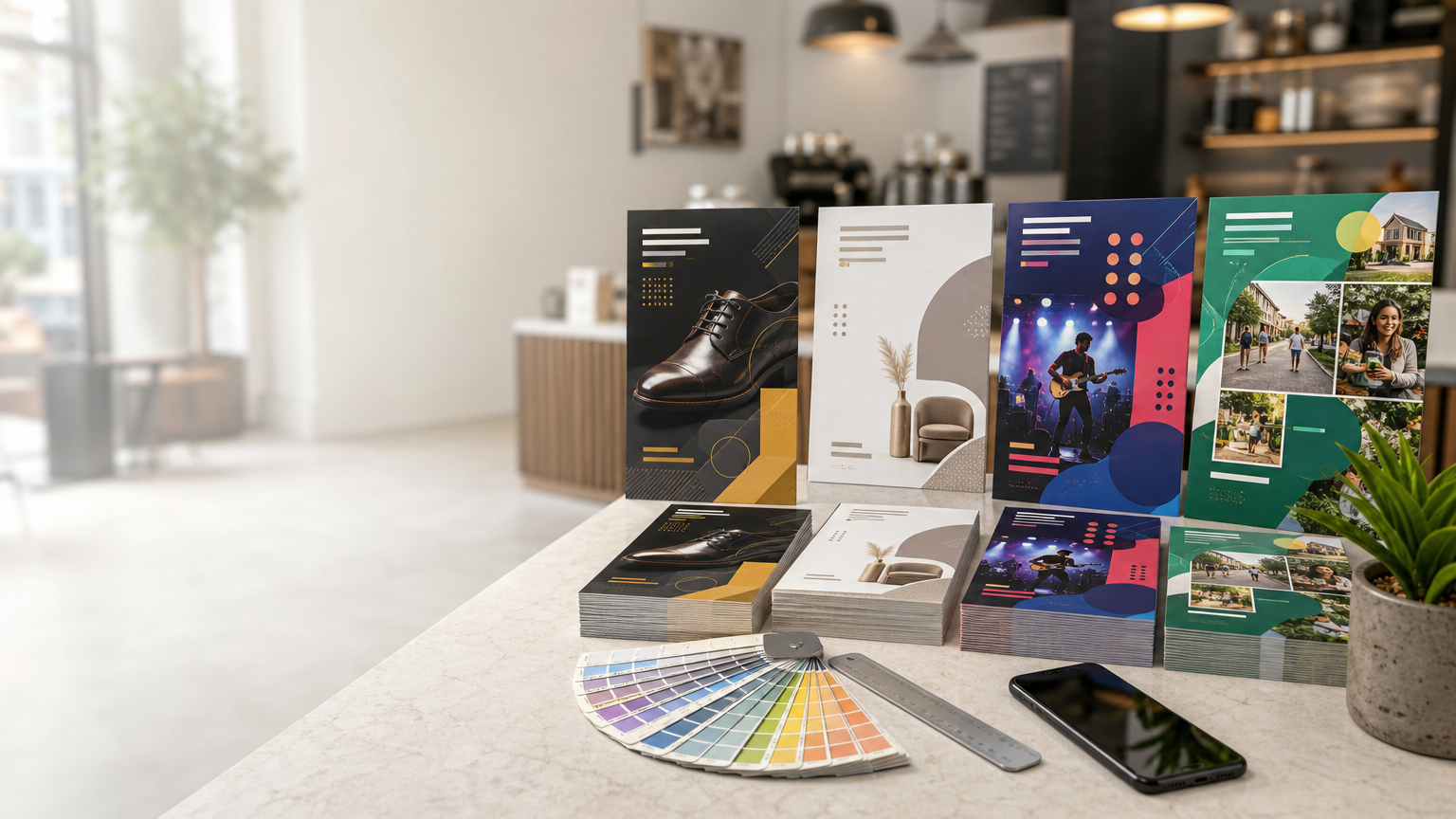
Flyers are a flexible way to announce an opening, explain a seasonal service, highlight a limited campaign or introduce a business to a neighborhood. A single-sheet leaflet is usually most effective when it has one primary message and one clear next step.
Lead with a benefit customers can understand quickly. Follow with a short explanation, relevant visuals, contact details and a call to action such as visiting a store, calling for an enquiry or viewing a product range. Avoid squeezing every service into one small page. If several offers compete for attention, readers may remember none of them.
Distribution is just as important as design. Consider permission-based handouts at events, inclusion with customer orders or placement at appropriate partner locations. Check local rules before distributing printed advertisements in public or residential areas.
3. Brochures for considered purchases
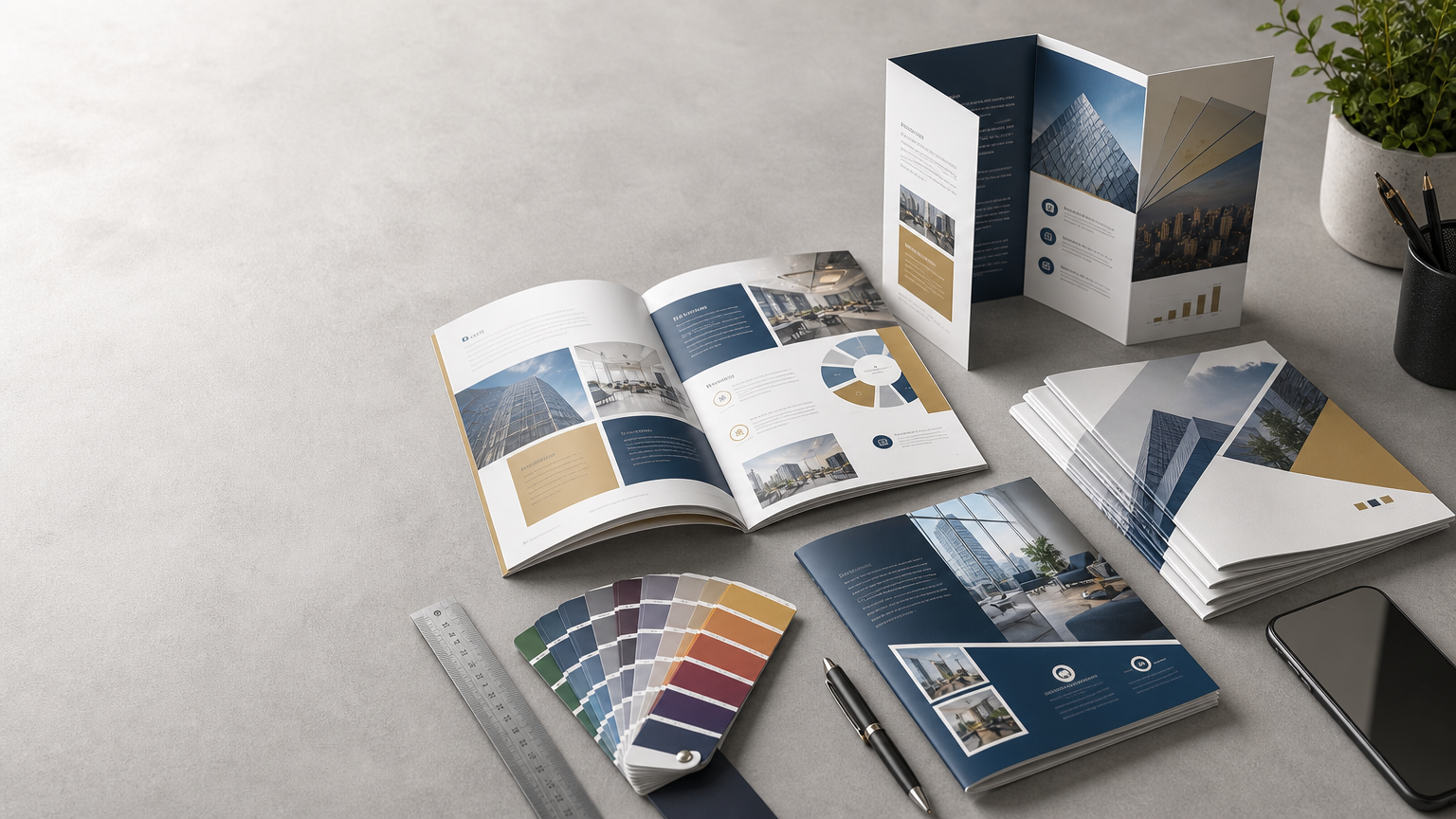
A brochure works well when customers need more information before making a decision. Interior services, educational offerings, business-to-business suppliers and companies with multiple product categories may benefit from a structured overview that can be read after a meeting.
Organize the content around customer questions: What do you offer? Who is it for? What choices are available? What should the customer do next? Use headings, concise descriptions, product photography and enough white space to make scanning comfortable. A folded brochure can introduce a focused service, while a multi-page format may suit a wider range.
Keep brochures updated. Details such as contact numbers, service descriptions and product options can change, so avoid printing large quantities of time-sensitive information without a clear distribution plan.
4. Posters for quick messages
Posters are useful for events, in-store promotions, opening announcements and directional information. Their strength is visibility from a short distance, not detailed reading. A strong headline, one supporting image and an obvious action often communicate more effectively than several paragraphs.
Choose the size according to viewing distance and available display space. Test the layout by stepping away from the screen or printing a small proof. If the essential message becomes difficult to read, simplify it. Confirm that any venue or public display location allows the poster before installation.
5. Banners and display signage for visibility
Banners and other printed display materials can help a business stand out at exhibitions, shopfronts, temporary stalls and promotional events. Their design must work in real surroundings, where lighting, distance and competing visual clutter affect what people notice.
Use a short headline, a clear visual and a limited number of contact details. Check the actual dimensions of the display area before artwork is prepared. Consider where eyelets, stands or mounting points might cover important content, and keep key information away from edges. For outdoor use, discuss material suitability and installation conditions with the print provider rather than assuming every banner material is appropriate.
6. Stickers and labels for brand recognition
Stickers can serve as package seals, product labels, event giveaways or simple branded reminders. For small product businesses, a well-planned label can help customers identify the item and understand its contents at a glance.
Start with the practical requirements: surface type, label dimensions, expected handling and whether the item may encounter moisture, friction or temperature changes. Select adhesive and material options accordingly. Product labels may also require legally prescribed information depending on the category, so verify applicable requirements before printing.
Do not sacrifice essential information for decoration. Clear contrast, readable type and a sensible information hierarchy make labels more useful and more professional.
7. Catalogues and product sheets for sales conversations
When a business sells multiple variations, a product sheet or catalogue can help customers compare options without relying on memory. It is particularly useful for wholesale enquiries, trade visits and services where specifications matter.
Use consistent product names, clear photographs and a predictable layout. Group related items together and explain the differences that affect a buying decision. If prices change frequently, consider keeping the printed catalogue focused on specifications and supplying current quotations separately. This reduces the chance of outdated information circulating.
8. Letterheads, envelopes and presentation folders
Not every printed marketing material needs to look like an advertisement. Consistent stationery can support a professional impression during proposals, quotations, introductions and formal correspondence. Letterheads, envelopes and folders are most useful when they make documents easier to recognize and organize.
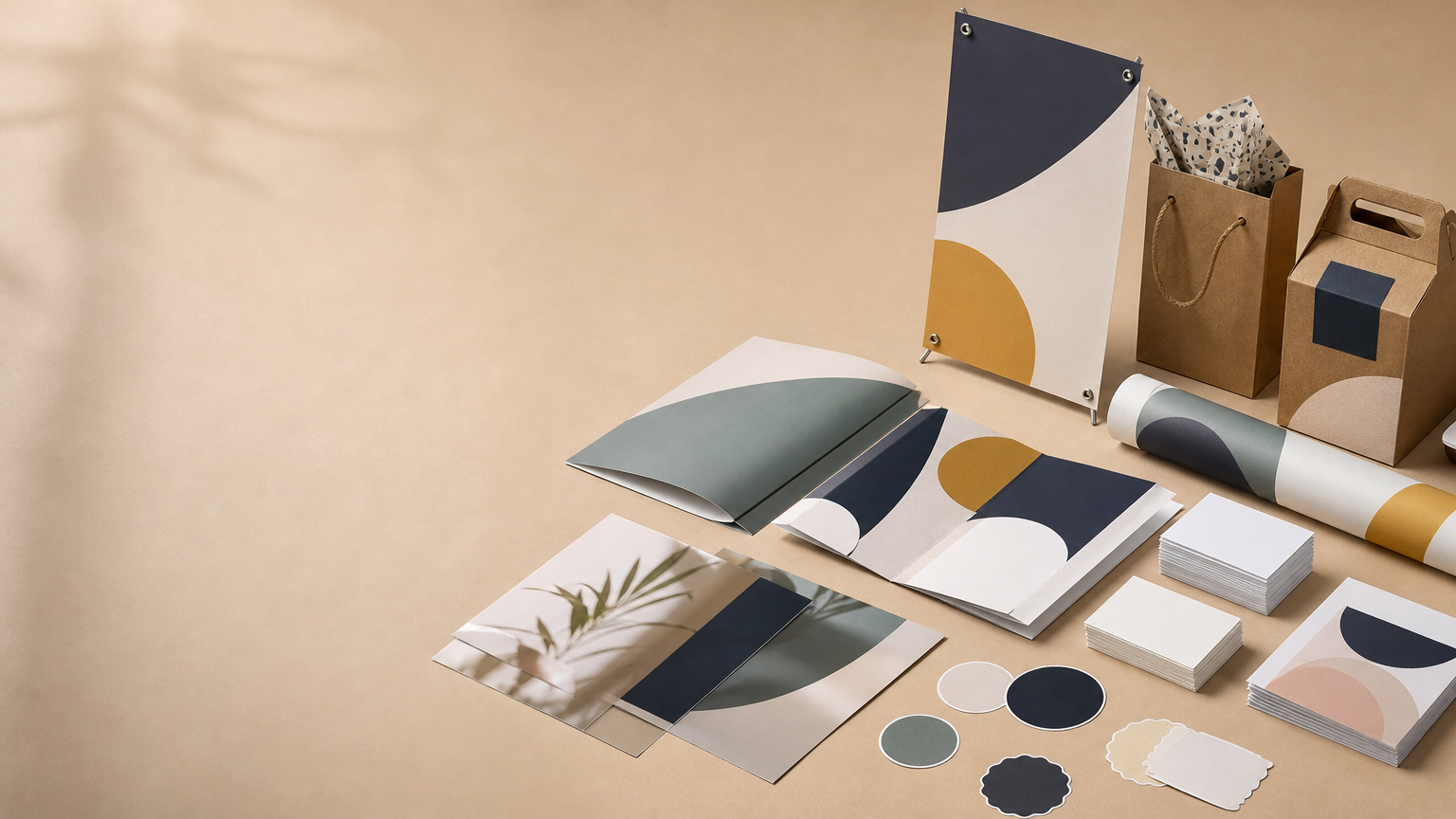
Use the same core brand colors, typography and contact details across the set. Leave enough space for the actual letter or proposal. A presentation folder may be helpful for meetings that involve several documents, but it is not necessary for every small business. Choose based on how often customers receive physical paperwork.
9. Menus, price lists and service cards
Restaurants, salons, repair services and other appointment-based businesses often need customers to compare options quickly. A menu or service card should be designed around decision-making rather than decoration.
Group offerings logically, make key details easy to locate and keep the layout legible under normal lighting. Consider how often the information changes before selecting a permanent or easily replaceable format. If prices, ingredients or services change regularly, smaller print runs or replaceable inserts may be more practical than a large fixed batch.
10. Packaging inserts and thank-you cards
A package insert reaches someone who has already purchased from you, making it a useful place to explain product care, provide support details or invite a future enquiry. A thoughtful card can also reinforce the brand experience without making the package feel overloaded with advertising.
Give the insert a clear purpose. Useful instructions or contact information should come before aggressive promotions. If you include a review request or social media invitation, make it optional and straightforward. Avoid promises, discounts or policies that the business cannot consistently honor.
Build a practical print mix for your business
The strongest combination depends on the customer journey. A neighborhood service business might pair visiting cards with a focused flyer and a readable storefront display. A product seller might prioritize labels, packaging inserts and product sheets. A business attending an exhibition may need a banner, brochures and contact cards that all carry the same message.
Start with two or three formats that support a specific campaign. Keep the headline, visual style, contact information and next step consistent. Customers should recognize the same business whether they first encounter a flyer, a card or a package label.
Design checks before sending files to print
Make the message easy to scan
Use a clear hierarchy: primary message first, supporting information second, action last. Avoid long blocks of text on materials meant to be viewed quickly. Check that contact details are correct and that important information remains readable at the finished size.
Prepare artwork for the chosen format
Confirm final dimensions, bleed, safe margins, image resolution and color requirements with your printing partner. Artwork that looks sharp on a phone screen may not reproduce well when enlarged. Request a proof when color accuracy, folds, cutting or placement is important, and review it carefully before approving production.
Check consistency and accuracy
Proofread names, phone numbers, website addresses and offer conditions. Test QR codes. Review any regulated product claims or mandatory label information. If multiple people approve artwork, agree on one final version so outdated files are not accidentally sent for printing.
Plan quantities and distribution before ordering
Printing more copies is not automatically better value if many remain unused. Estimate how many materials you can realistically distribute during the campaign period. Consider the lifespan of the message, storage conditions and how often the design may need changes.
Assign each format a distribution method before production. For example, visiting cards go to staff who meet customers, brochures go to qualified enquiries, and inserts go into eligible orders. This simple planning step helps prevent printed stock from sitting in a cupboard.
Measure whether the materials are helping
Printed promotion can be evaluated without complicated technology. Use a dedicated enquiry question such as “Where did you hear about us?” or a campaign-specific landing page when appropriate. Track enquiries, visits or repeat purchases over a reasonable period and compare them with the cost of design, printing and distribution.
Be careful when attributing every sale to one material. A customer may see a banner, search online and then call after receiving a card. Look for patterns rather than claiming perfect measurement. Use the findings to refine your message, quantity and distribution in the next campaign.
Conclusion
The best printed marketing materials are the ones that solve a clear communication problem. Visiting cards help maintain personal connections, flyers create local awareness, brochures explain detailed offerings, banners improve visibility, and labels or inserts support the customer experience after purchase. Choose a focused mix, prepare accurate artwork and plan where each piece will be used. For small businesses, thoughtful design and purposeful distribution matter more than printing every available format.