Quick summary
Flyers remain useful for local businesses when they combine a clear offer, strong design, targeted distribution, and an easy response path. Learn how print can support modern lead generation.
Digital marketing has changed how local businesses reach customers, but printed flyers still have an important role when they are planned with a clear purpose. A well-designed flyer can create local awareness, promote a specific service or offer, support an event, and encourage people to contact or visit a business.
The key is to treat the flyer as part of a complete campaign rather than simply a piece of paper to distribute. When the message, design, print quality, distribution area, and response method all work together, flyers can still contribute to lead generation for many local businesses.
Why Flyers Still Work for Local Marketing
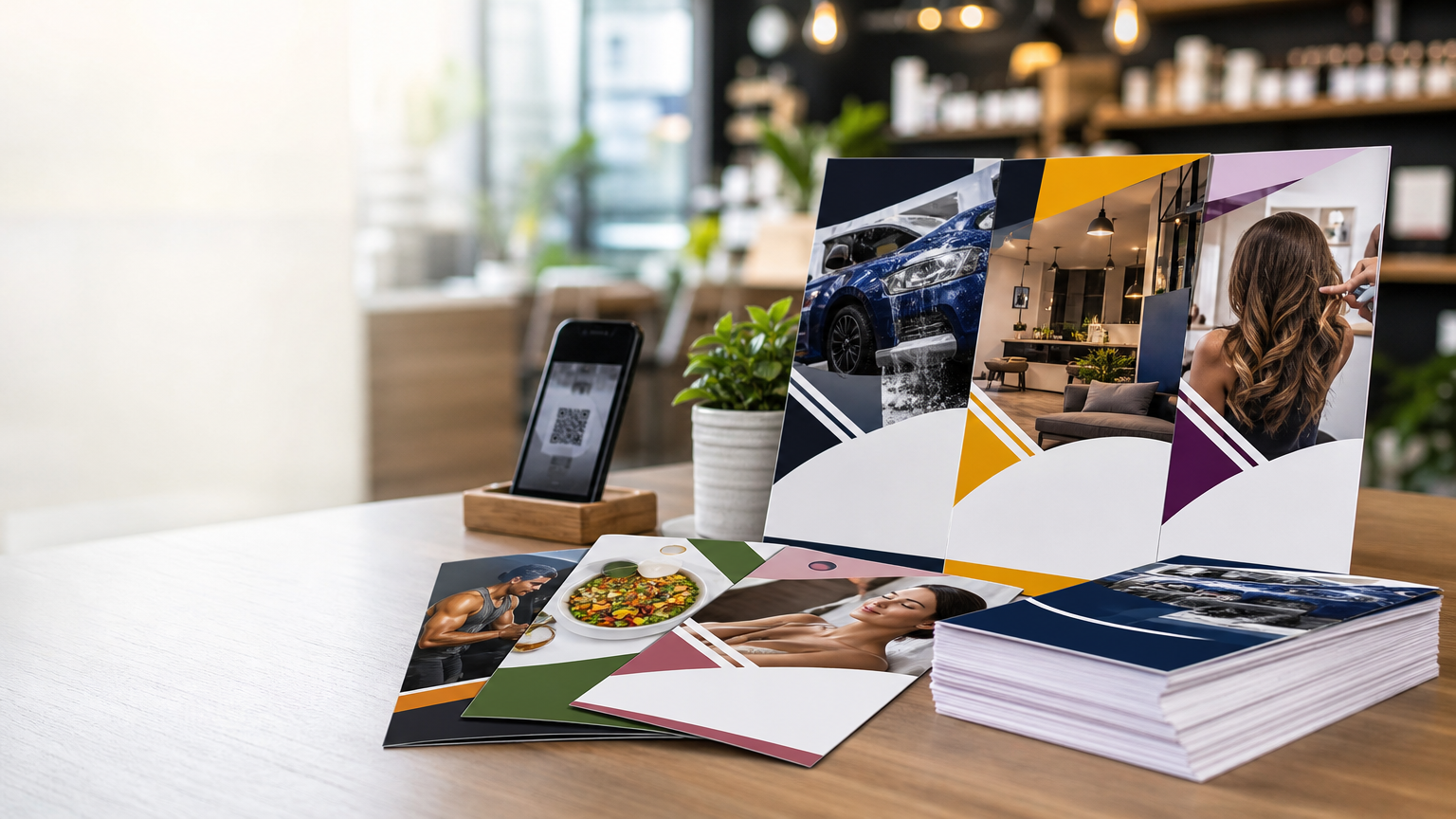
Flyers are especially useful for businesses that serve a defined geographic area. Restaurants, salons, clinics, gyms, retailers, tuition centres, repair services, event organisers, home-service providers, and similar businesses often need to reach people who live, work, shop, or spend time nearby.
A flyer gives the business a physical presence in that local environment. It can be handed directly to a potential customer, included with a purchase, placed at an appropriate partner location, used during an event, or distributed within a carefully selected area.
Print can also work together with digital marketing. A person may notice a flyer first and later search for the business online, scan a QR code, visit a landing page, call, or send a message. In this way, print can become the starting point of a digital customer journey.
1. Start with One Clear Objective
Before designing a flyer, decide exactly what you want the reader to do. The action might be booking an appointment, requesting a quotation, visiting a store, attending an event, calling for an enquiry, or redeeming an offer.
Trying to promote every product and service on one flyer usually makes the message harder to understand. A focused campaign is easier to design, easier for the reader to process, and easier for the business to evaluate.
2. Give the Reader a Reason to Pay Attention
Most people decide very quickly whether a flyer is worth reading. The main visual area should therefore communicate something useful immediately. This may be a clear benefit, an offer, a new service, a seasonal message, or an event.
The message should be specific without relying on exaggerated claims. A simple and relevant reason to act is usually more effective than a crowded collection of generic marketing phrases.
3. Make the Design Easy to Scan
A flyer is rarely read like a long article. Readers usually scan it first, so strong visual hierarchy is essential. The most important message should stand out, supporting details should be organised into clear sections, and the call to action should be easy to locate.
Use spacing to separate information rather than filling every part of the page. Avoid too many font styles, competing colours, very small text, and unnecessary decorative elements. A clean design often looks more professional and gives important information more impact.
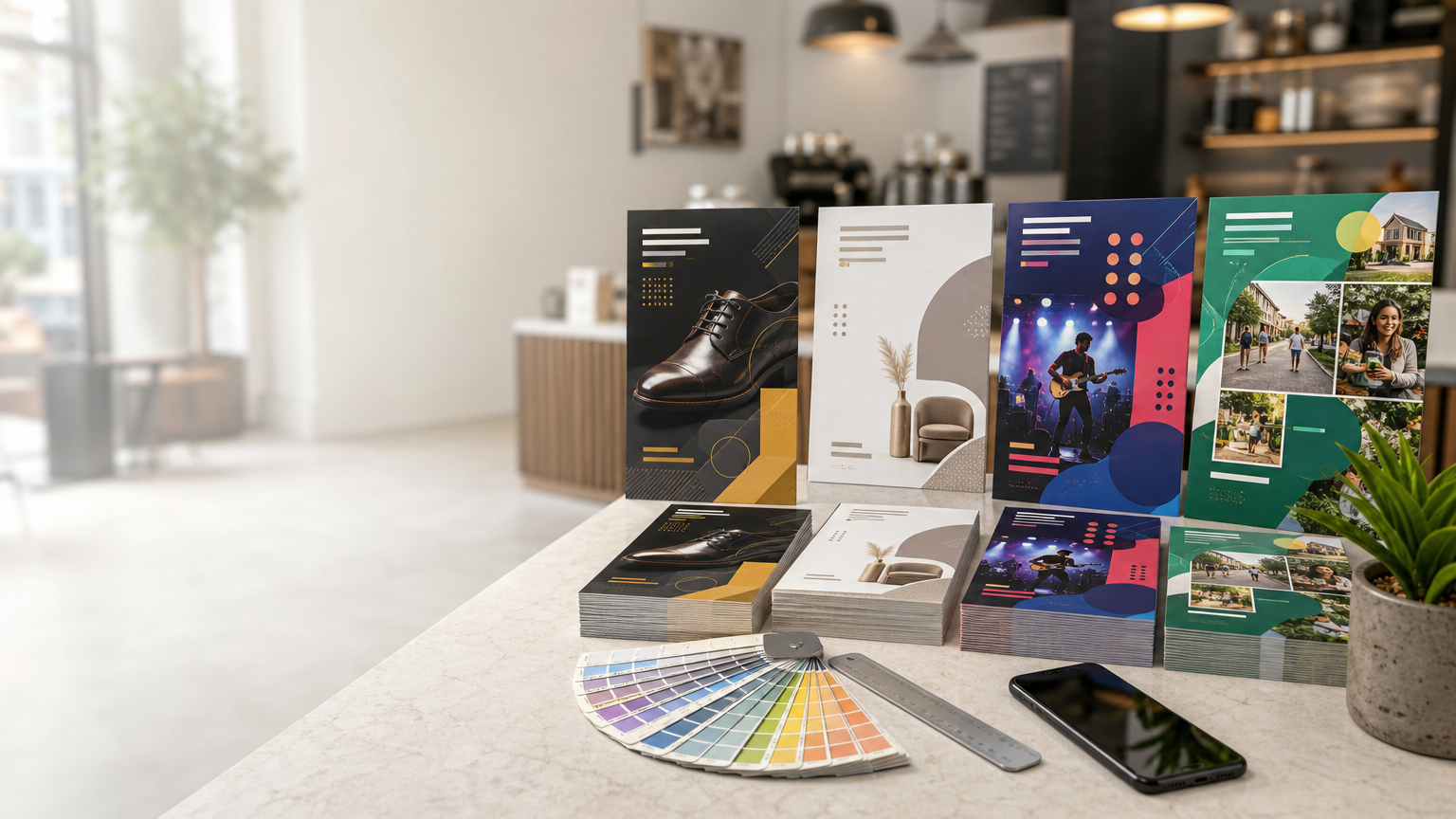
Relevant, high-quality photography or product imagery can also help. Images should support the offer rather than simply fill space.
4. Make the Call to Action Obvious
A flyer may attract attention but still fail to generate enquiries if the next step is unclear. Tell the reader exactly what to do next. This could be calling a number, visiting a location, sending a message, scanning a QR code, or visiting a campaign page.
The response method should be prominent and easy to use. Before printing, check every phone number, URL, QR code, address, date, and promotional detail carefully.
5. Connect Flyers with Digital Tracking
One advantage of modern flyer campaigns is that offline promotion can be connected to measurable digital actions. A business can use a campaign-specific QR code, landing page, promotional code, or enquiry reference.
These methods can help identify how many enquiries came from a flyer campaign and which message or distribution area performed better. Tracking does not need to be complicated; even a basic campaign code can provide useful information for future decisions.
6. Distribution Matters as Much as Design
A well-designed flyer will not produce strong results if it reaches the wrong audience. Distribution planning should therefore begin before the flyer is printed.
Consider where likely customers live, work, shop, study, exercise, or spend time. Depending on the business and applicable local rules, suitable methods may include direct handouts, delivery to selected local areas, event distribution, placement at partner businesses, inclusion with purchases, or display at reception counters.
Targeted distribution is generally more valuable than distributing the largest possible quantity without a clear plan.
7. Match the Message to the Local Audience
The design and tone should suit the intended customer group. A professional service may need a restrained and information-focused flyer, while a food promotion or event may benefit from a more energetic visual style.
The objective is not simply to make the flyer attractive. It should feel relevant to the people receiving it and appropriate for the product or service being promoted.
8. Print Quality Influences the Business Impression
The flyer itself represents the business. Low-resolution images, weak colour reproduction, poor trimming, or unsuitable paper can reduce the effect of a good message.
Paper choice should suit the campaign. A short-term high-volume handout may need a different material from a premium promotional piece intended to be retained. Finishes can also influence the look and feel, but they should support the campaign rather than add unnecessary complexity.
Before production, review image quality, colours, margins, bleed, spelling, contact details, QR codes, and any time-sensitive information.
9. Keep the Flyer Consistent with the Brand
A flyer should look like it belongs to the same business customers see online or at the physical location. Consistent colours, typography, imagery, and overall presentation help strengthen recognition.
This is especially important when the flyer sends readers to a website or social profile. A consistent visual experience helps customers feel confident that they have reached the correct business.
10. Test and Improve Future Campaigns
Instead of assuming one design or message will always work, local businesses can improve flyer campaigns through testing. Where practical, compare different offers, headlines, calls to action, or distribution areas.
Track the responses and use that information in the next campaign. Small changes in message clarity, targeting, or distribution can make future print promotions more effective.
Practical Flyer Checklist for Lead Generation
- One campaign goal: Decide the main action the reader should take.
- Clear message: Make the primary offer or benefit easy to understand.
- Readable layout: Use hierarchy, spacing, and legible type.
- Relevant visual: Use imagery that supports the promoted product or service.
- Strong call to action: Make the response path easy to find.
- Accurate information: Check contact details, dates, offers, and QR codes.
- Targeted distribution: Place flyers where the intended audience is likely to see them.
- Tracking method: Use a QR code, campaign code, or enquiry source where useful.
- Brand consistency: Keep the flyer connected visually with other marketing materials.
Common Flyer Mistakes to Avoid
One common mistake is overcrowding the flyer with too much information. Another is using a vague headline that does not provide a clear reason to continue reading. Businesses should also avoid low-quality images, tiny text, too many colours, and multiple competing calls to action.
Distribution without targeting is another problem. Printing more copies is not automatically better if the material reaches people who are unlikely to need the offer. Finally, remember that the flyer is only one stage of the customer journey. The website, message number, store, or enquiry process it leads to should be ready to provide a clear and consistent next step.
Final Thoughts
Flyers can still generate leads for local businesses because they create a tangible connection with people in a defined market. Their effectiveness depends less on whether print is old or new and more on whether the campaign is relevant, clear, well designed, properly printed, and intelligently distributed.
The strongest approach often combines print with digital follow-up. Use the flyer to attract attention locally, provide an easy response path, and track what happens next. With a focused message and thoughtful execution, printed flyers can remain a practical part of a modern local marketing strategy.