Quick summary
Discover the essential print materials that can help a small business look professional, communicate clearly, support marketing, and improve everyday customer interactions without wasting budget.
For a small business, printed materials are more than office supplies. They help customers recognize the brand, understand an offer, remember contact details, and interact with the business in the physical world. Even when most communication happens online, print can strengthen credibility and make everyday customer touchpoints feel more professional.
The challenge is deciding what is actually worth printing. Small businesses often have limited budgets, so the goal should not be to order every possible item. A better approach is to invest in a focused set of materials that support sales, customer communication, day-to-day operations, and brand consistency.
The right mix depends on the type of business. A retailer, consultant, clinic, restaurant, salon, service provider, manufacturer, and startup may all need different combinations. However, several print materials are useful across many industries and can provide long-term value when designed and produced carefully.
1. Business Cards for Personal Introductions
Business cards remain useful because they provide a fast, simple way to share essential information during meetings, networking, site visits, exhibitions, local events, and customer conversations. They are especially effective when a business relies on personal relationships or local referrals.
A good business card should make important information easy to find. The name, role, business name, phone number, email address, website, and any relevant social or messaging contact should be clear without making the layout crowded.
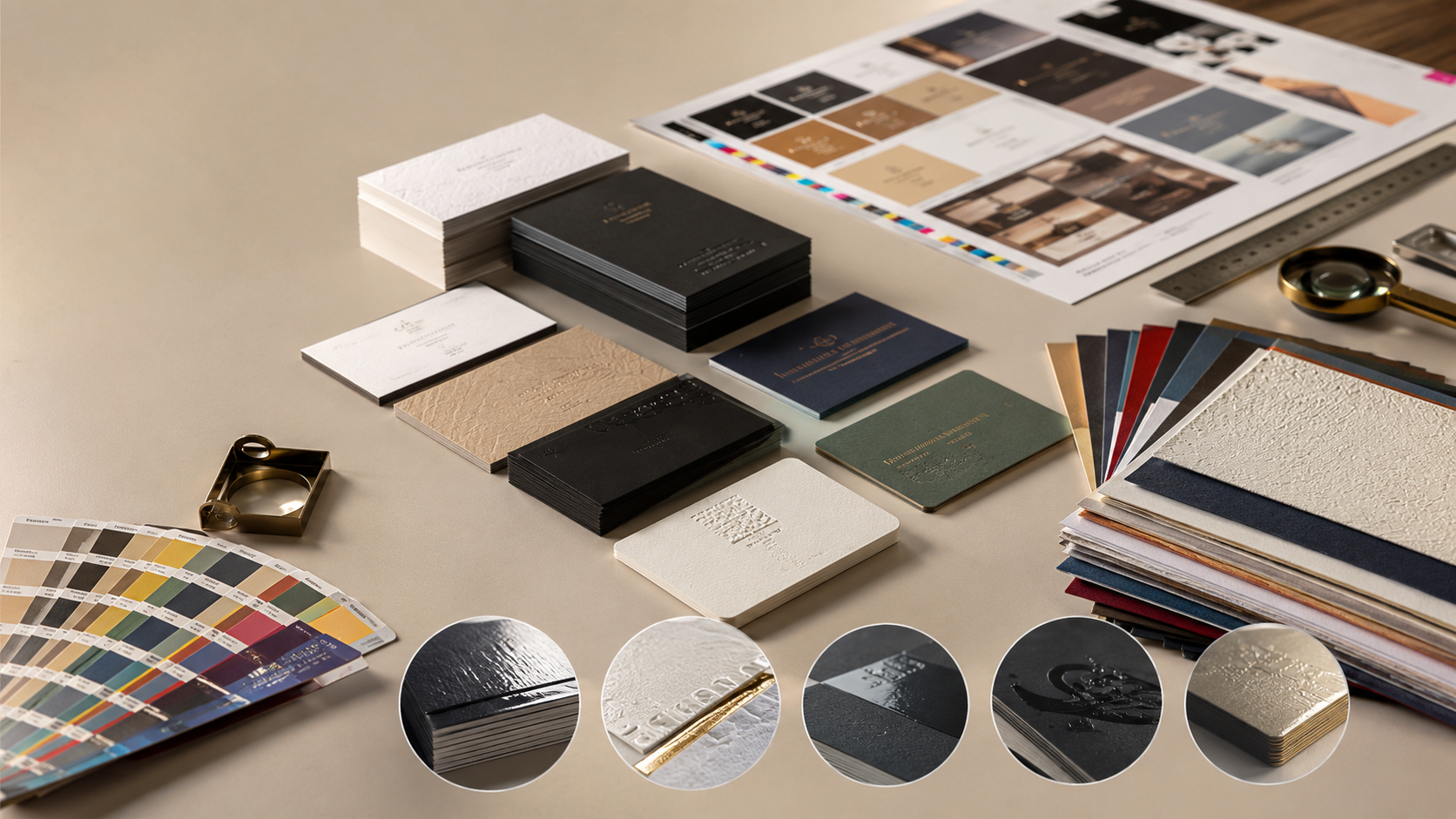
Material and finish also affect how the card feels. A thicker stock can feel more substantial, while matte, gloss, textured, or specialty finishes create different impressions. The best choice should match the brand rather than simply using the heaviest or most decorative option available.
2. Letterheads for Formal Communication
Letterheads help make formal communication look organized and consistent. They may be used for quotations, covering letters, proposals, official notices, confirmations, certificates, agreements, or other documents that represent the business.
The design should usually be clean and practical. Branding elements should support the document without competing with the main text. Important details such as business name, contact information, website, and address can be positioned consistently so that every printed document follows the same visual system.
Paper selection matters as well. A stock that works well for office printers, handwriting, signatures, and filing is usually more practical than an overly coated or decorative paper for everyday documents.
3. Envelopes for Professional Presentation
Branded envelopes are often overlooked, but they can make mailed documents feel more deliberate. They are useful when sending invoices, contracts, quotations, certificates, invitations, account documents, or customer correspondence.
Even a simple envelope with the business name, return address, and consistent branding can improve presentation. For businesses that still send physical documents regularly, matching letterheads and envelopes can create a more complete identity.
4. Flyers for Local Promotions and Lead Generation
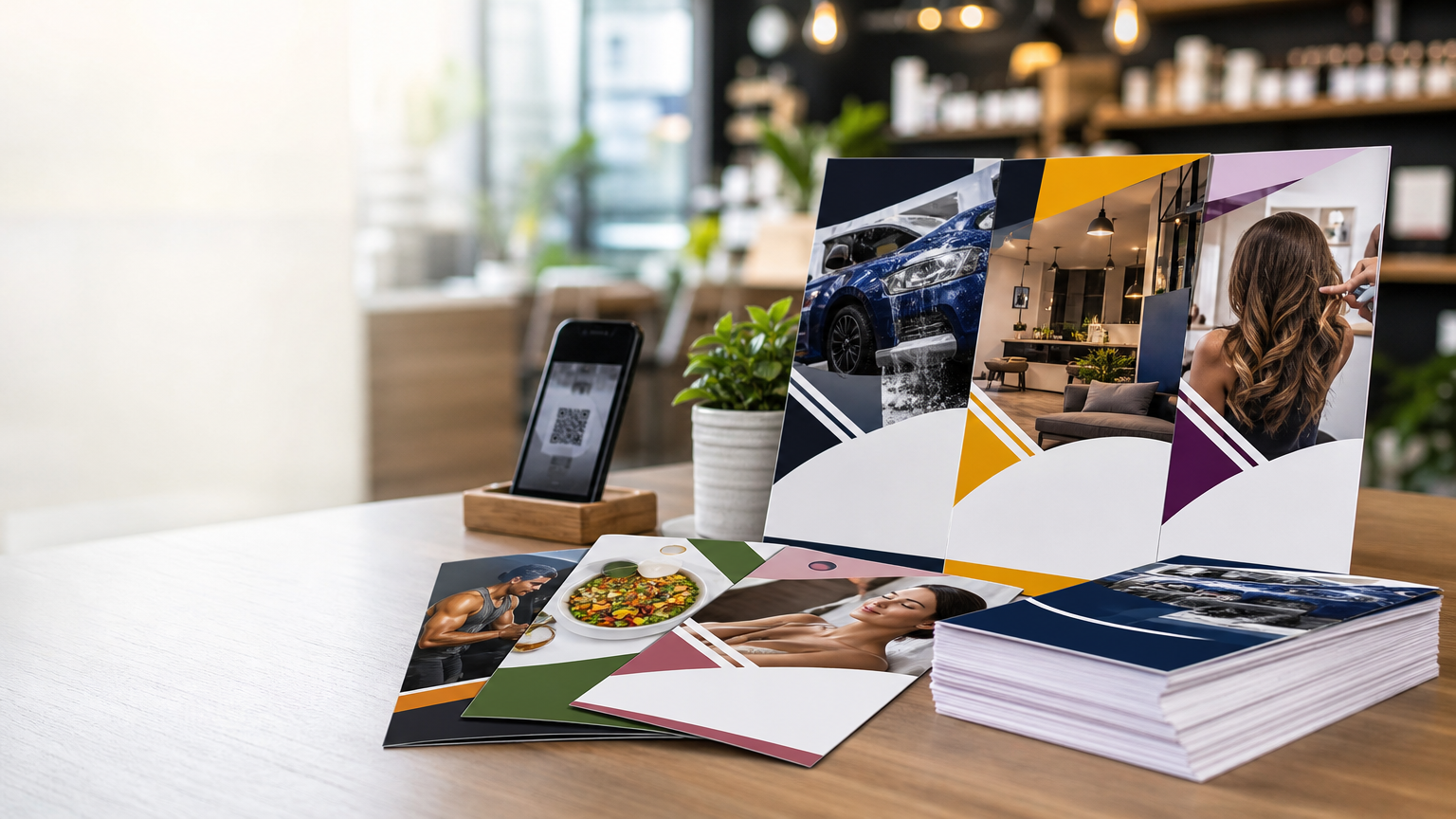
Flyers are one of the most flexible promotional materials for small businesses. They can be used for launches, seasonal offers, new services, events, local campaigns, menu promotions, appointment offers, property promotions, classes, and many other short-term marketing goals.
The strongest flyers usually focus on one clear message. A crowded flyer that tries to explain every product or service can be difficult to scan. A better layout gives priority to the main offer, key benefit, relevant image, contact method, and call to action.
Modern flyers can also connect print with digital marketing. A QR code, campaign-specific web page, enquiry code, or dedicated contact method can make it easier to track responses and move the customer from a physical flyer to an online action.
5. Brochures for Explaining Products and Services
When a business needs to communicate more detail than a flyer can comfortably hold, a brochure is often more suitable. Brochures can introduce a company, explain services, compare product categories, present packages, describe processes, or support a sales conversation.
The key is information structure. A brochure should guide the reader through the content in a logical order. Headings, short sections, images, diagrams, and clear calls to action are usually more effective than long blocks of dense text.
For small businesses, brochures are especially useful when the buying decision involves explanation. They can support meetings, reception areas, sales visits, exhibitions, enquiries, and follow-up discussions.
6. Product or Service Price Lists
A printed price list can save time when customers frequently ask about standard products, service packages, sizes, or options. It is particularly useful at counters, reception desks, stores, salons, clinics, workshops, exhibitions, and consultation points.
The layout should make comparisons easy. Group related items, keep names consistent, and avoid unnecessary visual clutter. If prices change frequently, choose a format and print quantity that can be updated without creating excessive waste.
For businesses with dynamic pricing, a printed service guide without fixed prices may be more practical, while quotations can be provided separately.
7. Stickers and Labels for Products, Packaging, and Branding
Stickers and labels are valuable because they can add branding or information to existing products and packaging without requiring fully custom packaging from the beginning. Small businesses can use them on boxes, bags, jars, bottles, envelopes, folders, parcels, takeaway packaging, promotional kits, and other surfaces.
Labels may carry product names, variants, handling instructions, contact details, barcodes, batch information, or other required information depending on the product. Before printing, businesses should carefully verify all mandatory content relevant to their industry.
Material selection should match the application. A label used indoors on paper packaging has different requirements from one exposed to moisture, refrigeration, outdoor handling, or repeated contact.
8. Packaging Inserts and Thank-You Cards
Businesses that ship or hand over products can use inserts to improve the customer experience. A small printed card can explain care instructions, provide support details, guide the customer to a website, request feedback, share a referral message, or simply reinforce the brand.
The value of an insert comes from usefulness, not from adding unnecessary paper. The message should have a clear purpose and fit naturally into the customer journey. For example, a care guide is valuable when the product needs maintenance, while a simple contact card may be more appropriate for a service-related order.
9. Menus, Service Menus, and Appointment Cards
Restaurants, cafés, salons, clinics, wellness businesses, and other service providers often benefit from printed menus or service lists. These materials help customers understand options without requiring staff to repeat the same information every time.
For service businesses, appointment cards can also be useful when customers prefer a physical reminder. They can include space for date, time, contact details, and basic instructions. The design should remain simple enough to write on easily.
Because menus and service lists may be handled frequently, durability and readability should be considered alongside appearance.
10. Presentation Folders for Proposals and Meetings
A presentation folder can organize quotations, brochures, product sheets, forms, certificates, and other documents into one professional package. It is useful for businesses that regularly meet clients, submit proposals, onboard customers, or provide multiple documents at once.
The folder itself does not need to be elaborate. Strong branding, clean layout, suitable material, and practical internal pockets can be enough to create a polished presentation.
11. Signage and Point-of-Sale Print
Small businesses with physical premises need clear visual communication. This can include opening hours, directional signs, counter messages, promotional posters, product information, service boards, safety notices, or temporary campaign signage.
The most effective signage is easy to understand from the expected viewing distance. Font size, contrast, placement, lighting, and surrounding visual clutter all affect readability.
Temporary promotional signage should also be updated promptly. Old offers or outdated information can create confusion and reduce trust.
12. Certificates, Forms, and Internal Operational Print
Not every useful print item is customer-facing. Internal forms, job sheets, checklists, delivery notes, service records, certificates, inspection sheets, and other operational documents can help standardize routine processes.
Before printing large quantities, review whether the information is stable. If a form changes often, smaller print runs may be more practical. If the process is better handled digitally, avoid printing simply because it has always been done that way.
How to Prioritize Your Printing Budget
A small business does not need to order all of these materials at once. Start by identifying where print can solve a real communication or operational need.
Prioritize high-frequency customer touchpoints
If customers regularly receive quotations, visit a physical location, attend consultations, or take home product information, invest first in materials used at those moments.
Choose materials that can be reused
Business cards, presentation folders, general brochures, branded stationery, and evergreen service guides may remain useful for longer periods than highly time-sensitive promotions.
Keep short-term promotions flexible
For flyers, posters, offers, price lists, and seasonal campaigns, avoid unnecessarily large quantities when the message may change. Smaller, well-planned batches can reduce outdated stock.
Maintain brand consistency
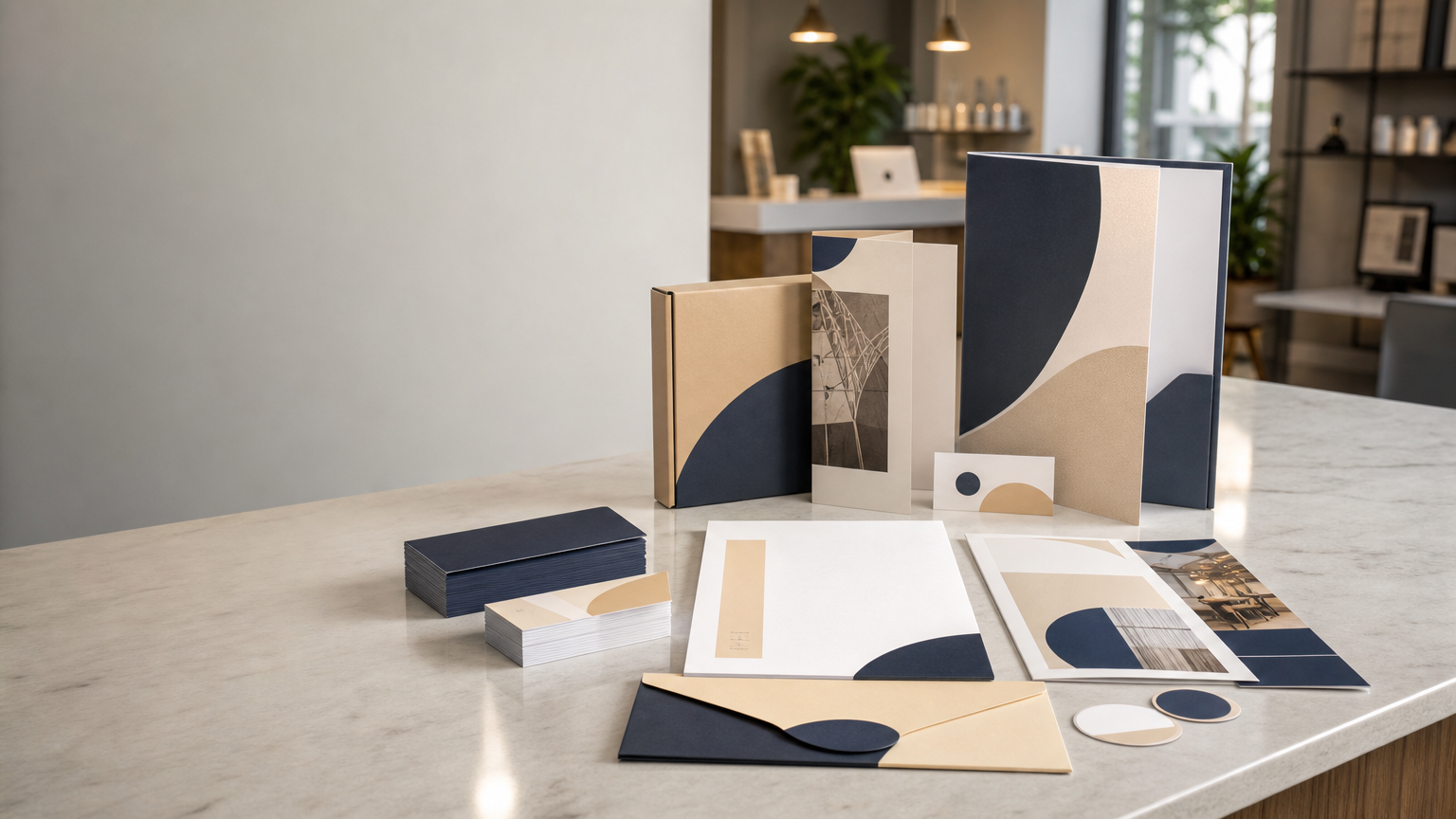
Colors, typography, logo placement, tone, contact details, and image style should feel consistent across business cards, flyers, brochures, stationery, packaging, and signage. Consistency often creates a stronger professional impression than expensive finishing used without a clear visual system.
Common Mistakes to Avoid
One common mistake is ordering print before the content is final. Incorrect phone numbers, outdated addresses, spelling mistakes, wrong prices, or old QR codes can make an entire batch unusable.
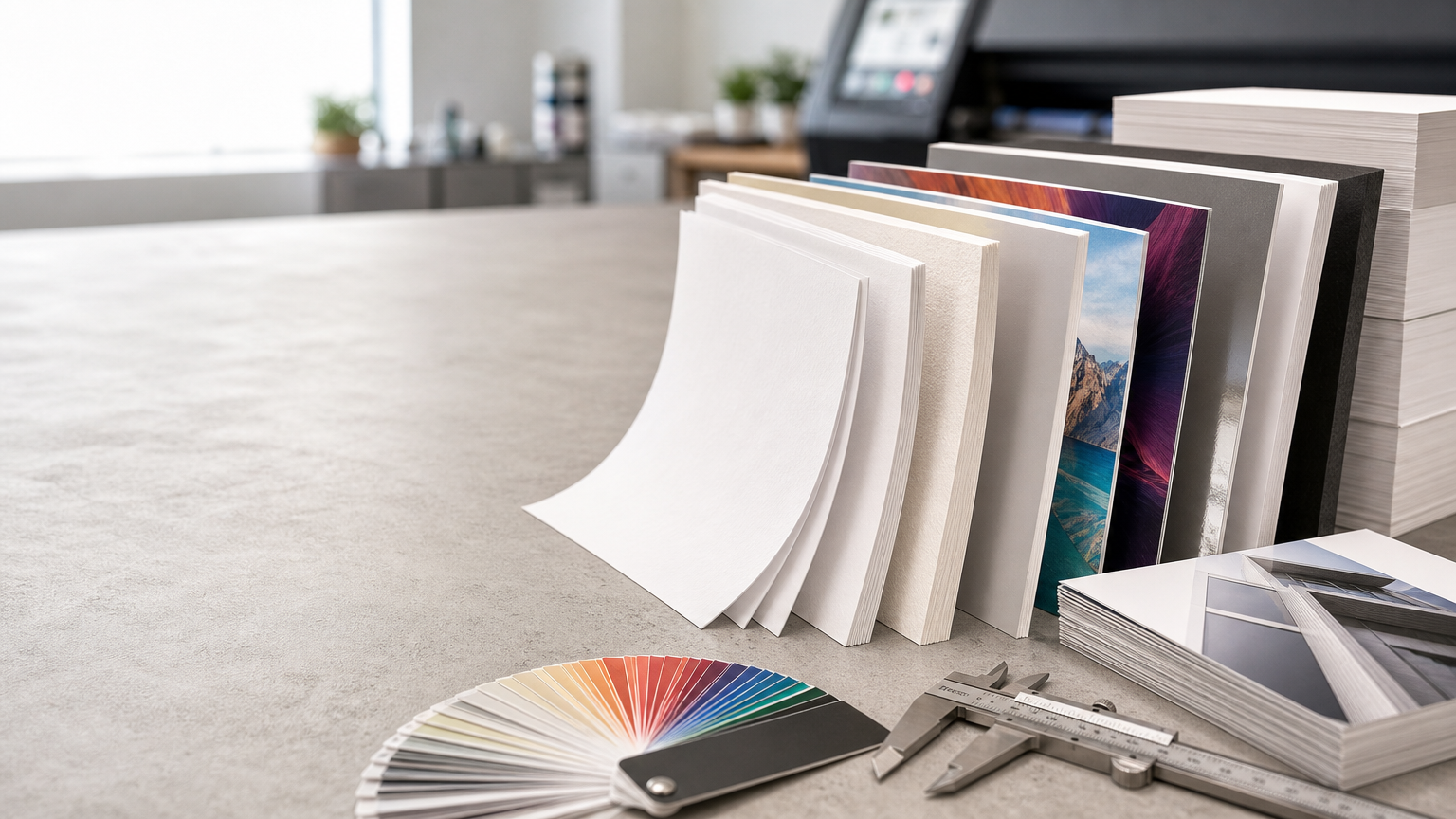
Another mistake is choosing materials only by appearance. Paper, finishing, size, and durability should suit how the item will actually be handled. A premium-looking material is not useful if it is difficult to write on, fold, mail, store, or update.
Businesses should also avoid creating separate designs for every item without a shared brand system. Print materials work better together when customers can immediately recognize that they come from the same business.
A Practical Starter Set for Many Small Businesses
For a business that is building its print presence from the beginning, a practical starter set may include business cards, letterheads or quotation stationery, a simple brochure or service guide, promotional flyers for campaigns, branded envelopes where needed, and suitable stickers or labels for packaging or product identification.
From there, additional materials can be added based on actual use. Restaurants may prioritize menus and takeaway inserts. Salons and clinics may add service menus and appointment cards. Product businesses may invest more in labels, packaging inserts, and presentation materials. B2B businesses may benefit from folders, product sheets, brochures, and formal stationery.
Final Thoughts
The best print materials for a small business are not necessarily the most expensive or the most numerous. They are the materials that support real customer interactions, make information easier to understand, improve presentation, and help the brand remain consistent.
Start with the print pieces you will use most often. Keep the design clear, verify information carefully before production, select materials based on practical use, and review what actually helps customers or staff. A focused print system can support marketing, sales, service, packaging, and everyday operations without wasting budget on items the business does not need.